

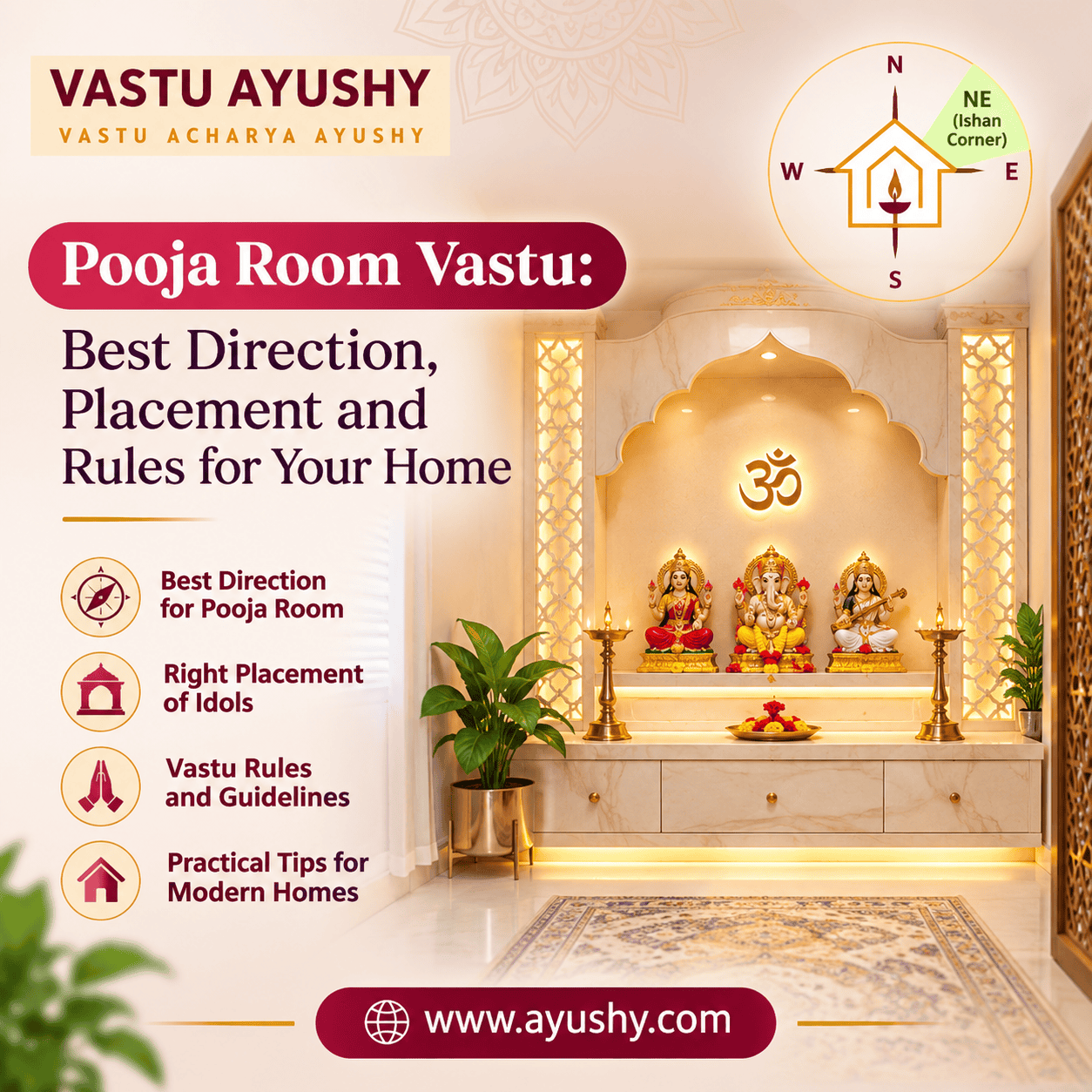
Pooja Room Vastu
A pooja room is one of the most peaceful and meaningful spaces in an Indian home. It is where families come together for daily prayers, meditation and spiritual activities. Whether you have a dedicated prayer room or a small mandir in a corner of your apartment, its placement and arrangement are important considerations in traditional Vastu Shastra.
According to Vastu principles, the direction, location and arrangement of a pooja room can contribute to creating a calm and harmonious spiritual environment. From choosing the right corner to positioning idols, selecting suitable colours and maintaining cleanliness, several factors are traditionally considered when designing a home temple.
However, modern homes and apartments often have space limitations, making it important to understand how these traditional recommendations can be adapted to contemporary layouts.
In this guide, we explore the essential pooja room Vastu rules, including the best direction for a home mandir, the correct placement of idols, prayer orientation and practical solutions for small homes and apartments.
Why Is Pooja Room Placement Important in Vastu Shastra?
Vastu Shastra is a traditional Indian system of architecture that considers directions, spatial arrangements and the five elements – Earth, Water, Fire, Air and Space – when planning living environments.
Within this traditional framework, the pooja room is considered a sacred area associated with prayer, devotion and spiritual activities. Its location is therefore given special attention when planning a home’s layout.
Proper pooja room placement is traditionally believed to support a peaceful atmosphere and create a dedicated environment for worship. It also helps maintain a clear distinction between spiritual activities and everyday household functions.
Some important reasons to consider pooja room placement include:
- Creating a peaceful environment: A thoughtfully arranged prayer space can provide a quiet place for meditation, reflection and daily worship.
- Maintaining spiritual discipline: A dedicated mandir encourages regular prayer and helps establish a consistent spiritual routine.
- Following traditional directional principles: Vastu Shastra recommends specific directions for locating the pooja room based on their traditional significance.
- Improving space organisation: Proper placement helps keep prayer items, idols, diyas and other religious accessories organised.
- Maintaining cleanliness and tranquillity: A clean and well-ventilated prayer area makes daily worship more comfortable.
While these principles are rooted in traditional beliefs, the practical objective should be to create a prayer space that feels comfortable, clean and suitable for the family’s needs.
Which Is the Best Direction for a Pooja Room?
According to traditional Vastu Shastra, the north-east direction, also known as the Ishan corner, is generally considered the most favourable location for a pooja room.
However, east and north directions are also commonly recommended when the north-east corner is unavailable. The final choice may depend on the home’s layout, available space and the position of other rooms.
Here is a closer look at the three commonly preferred directions.
North-East Direction (Ishan Corner)
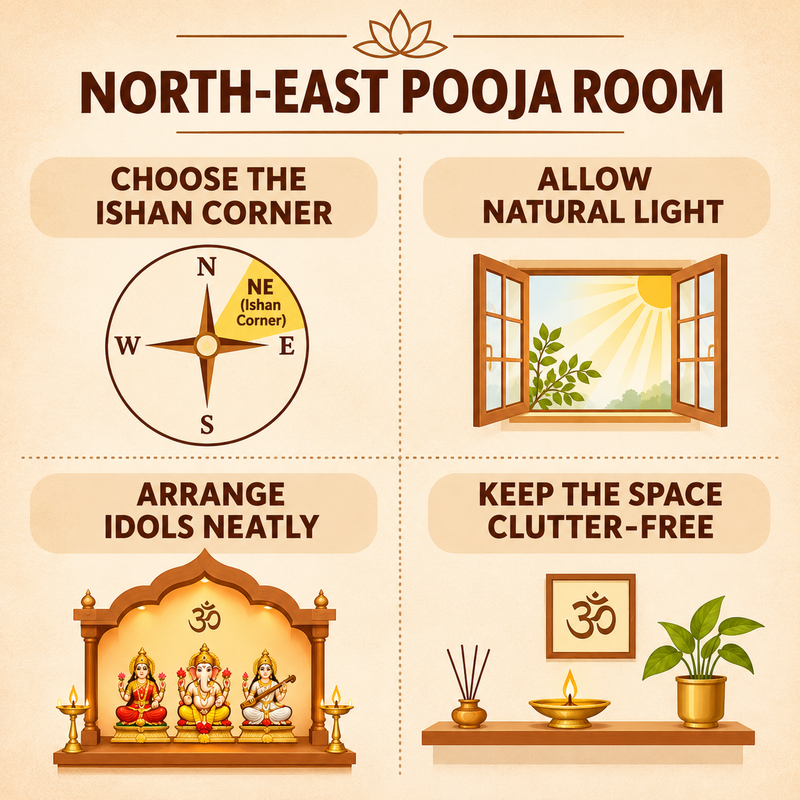
The north-east corner is traditionally regarded as the most auspicious location for a pooja room. In Vastu Shastra, this direction is associated with spiritual activities, clarity and positive energy.
The Ishan corner is often preferred when planning a new home because it provides an opportunity to create a dedicated worship area without interfering with the regular movement and activities of the household.
Some traditional recommendations for a north-east pooja room include:
- Keep the area clean, uncluttered and well-maintained.
- Position the mandir so that family members can comfortably face east or north while praying.
- Use light and soothing colours such as white, cream or light yellow.
- Allow sufficient natural light and ventilation wherever possible.
- Avoid using the space for general storage or unrelated household activities.
If you are designing a new house, considering the north-east corner during the initial floor-plan stage can make it easier to incorporate a dedicated prayer area.
East Direction
The east direction is another commonly recommended location for a pooja room according to Vastu principles.
Traditionally associated with the rising sun, east is considered symbolic of new beginnings, light and positive surroundings. It can be a practical alternative when the north-east corner is occupied or unavailable.
For an east-facing prayer space, consider the following:
- Choose a quiet corner away from busy household activities.
- Arrange the mandir to provide sufficient space for daily prayers.
- Ensure that the area receives adequate lighting.
- Keep the prayer space separate from shoe racks, storage units and other unrelated items.
- Maintain a clean and organised arrangement of religious accessories.
An east-side pooja room can work well in many modern home layouts, provided it is planned thoughtfully.
North Direction
The north direction is also considered suitable for a pooja room in several traditional Vastu recommendations.
If the north-east and east areas are not available, the north side can be considered as an alternative, depending on the overall layout of the house.
When choosing the north direction, focus on:
- Maintaining a dedicated and peaceful prayer area.
- Ensuring convenient access for family members.
- Keeping the mandir away from bathrooms and other unsuitable locations.
- Providing appropriate lighting and ventilation.
- Avoiding unnecessary objects around the prayer space.
It is important to remember that directional recommendations should be considered in relation to the complete home layout rather than in isolation.
Which Direction Should You Face While Praying?
The direction you face while praying is another important consideration in traditional pooja room Vastu.
East and north are generally preferred directions for facing during daily prayers. However, the arrangement of the mandir and idols should also be considered when deciding the prayer orientation.
Commonly followed recommendations include:
- Facing east: East is traditionally associated with the rising sun and is commonly preferred for daily worship.
- Facing north: North is another direction traditionally considered suitable for prayer.
- Keeping the arrangement comfortable: Ensure that there is sufficient room to sit or stand comfortably during worship.
For example, if the mandir is placed against the west wall, family members may face west while praying towards the idols, depending on the layout. Similarly, a mandir positioned against the south wall may allow worshippers to face south.
The important point is to plan the mandir and prayer area together rather than selecting their directions independently.
If you are unsure about the correct arrangement, a residential Vastu assessment can help evaluate the placement in the context of the entire home.
Vastu Rules for Placing Idols and Pictures
The placement of idols and religious pictures is an important aspect of home temple Vastu. Apart from selecting an appropriate direction, attention should be given to the height, arrangement and surrounding space.
A well-organised mandir allows family members to perform daily rituals comfortably while maintaining the sanctity of the prayer area.
Ideal Height and Placement of Idols
According to commonly followed Vastu recommendations, idols should be positioned at a comfortable height that allows worshippers to offer prayers without difficulty.
Some traditional guidelines include:
- Place idols on a clean and stable platform or mandir.
- Avoid positioning idols directly on the floor.
- Keep the idols at a height that allows comfortable viewing during prayer.
- Arrange the idols neatly rather than overcrowding the mandir.
- Ensure that the idols are in good condition and properly maintained.
- Avoid placing religious pictures or idols randomly around the prayer area.
The size of the idols should also be appropriate for the available space. A small apartment mandir does not need large idols or an elaborate arrangement to serve its purpose.
Space Between Idols and Walls
Traditional Vastu recommendations generally suggest maintaining some space between idols and the surrounding walls.
Avoid pushing idols directly against the wall. A small gap can make cleaning and maintenance easier while preventing the mandir from looking overcrowded.
Additional considerations include:
- Maintain adequate space between individual idols.
- Avoid placing too many idols in a small mandir.
- Keep the arrangement symmetrical and organised wherever possible.
- Ensure that the idols are not placed directly below shelves containing unrelated household items.
- Avoid positioning the mandir in a way that makes daily worship uncomfortable.
The objective is to maintain a neat and respectful arrangement rather than focusing only on the number or size of idols.
Placement of Diyas and Other Prayer Items
Diyas, incense holders, bells, flowers and other religious accessories are commonly used during daily worship. Their placement should allow safe and convenient use.
Traditional Vastu practices generally recommend placing the diya in the appropriate designated area of the mandir, with the arrangement depending on the family’s worship traditions.
Keep these practical points in mind:
- Use a stable and fire-resistant surface for lighting diyas.
- Keep curtains, wooden decorations and other combustible materials away from open flames.
- Place incense holders where smoke can disperse safely.
- Store prayer books, bells and other accessories neatly.
- Remove old flowers and used worship materials regularly.
- Avoid allowing oil, ash or wax to accumulate around the mandir.
Safety and cleanliness should always take priority when arranging prayer accessories.
Where Should You Avoid Building a Pooja Room?
Apart from identifying favourable directions, traditional Vastu Shastra also recommends avoiding certain locations when planning a pooja room.
These recommendations are intended to maintain the peaceful and dedicated nature of the worship area.
Some locations that are generally discouraged include:
1. Directly Next to a Bathroom
A pooja room is traditionally kept separate from bathrooms because the two spaces serve different purposes. If your floor plan offers limited options, try to maintain an appropriate separation and avoid placing the mandir against a shared bathroom wall wherever possible.
2. Under a Staircase
The space below a staircase is generally considered unsuitable for a dedicated pooja room in traditional Vastu recommendations. Such areas may have limited headroom, ventilation and natural light.
3. Inside a Bedroom
A dedicated pooja room is generally preferred over placing a mandir inside a bedroom. However, when space is limited, a small, properly maintained prayer unit can be considered with suitable privacy and separation.
4. Near Shoe Racks or Storage Areas
Avoid locating the mandir close to shoe racks, cleaning equipment or general storage. The prayer area should remain clean and free from unnecessary household clutter.
5. In Dark or Poorly Ventilated Corners
A prayer space should be comfortable and easy to maintain. Avoid choosing a location that remains dark, damp or poorly ventilated.
6. In the Basement or Under Low Ceilings
Traditional Vastu generally favours a well-lit and accessible location for worship. A basement or cramped area may not provide the desired environment for a dedicated prayer room.
If your home already has a mandir in one of these locations, there is no need to make immediate structural changes. The overall floor plan and available alternatives should be evaluated before deciding on any modifications.
Pooja Room Vastu for Modern Apartments and Small Homes
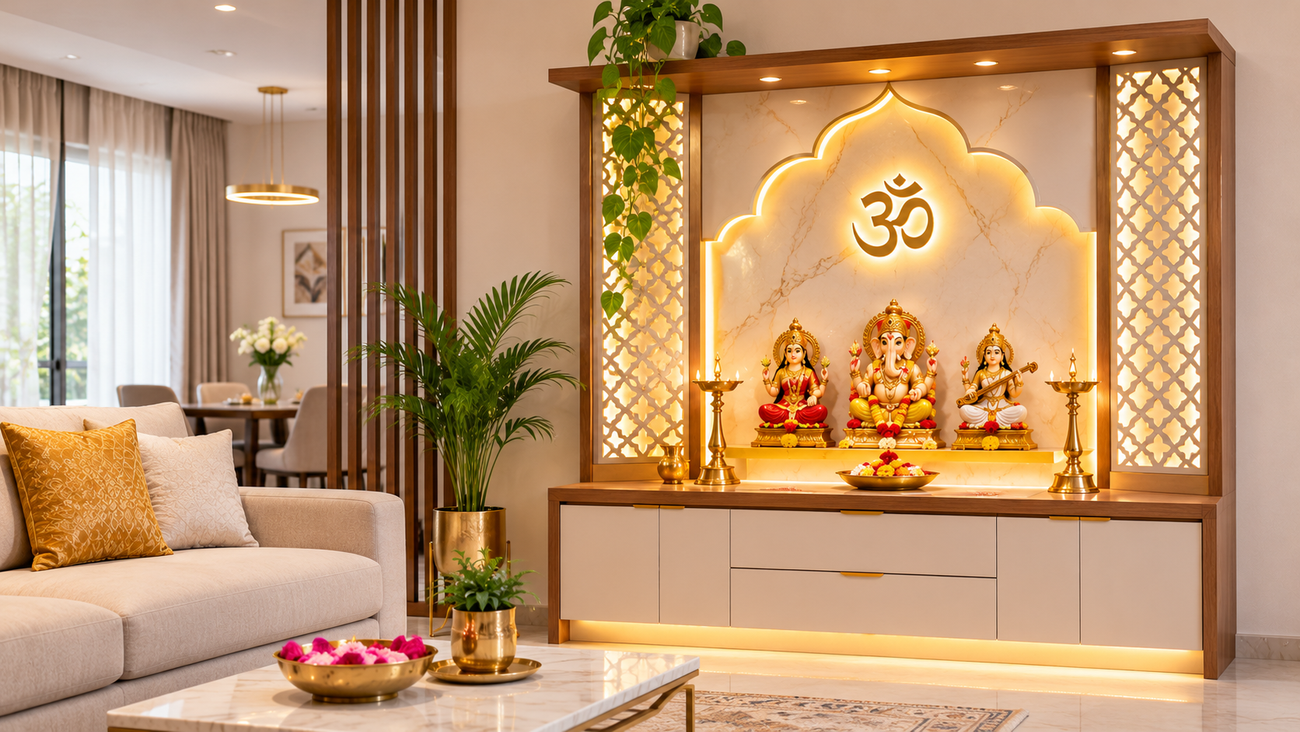
Modern apartments often have limited space, and creating a separate pooja room may not always be practical. However, this does not mean that homeowners cannot follow traditional Vastu recommendations.
A thoughtfully designed compact mandir can provide a comfortable space for daily worship without requiring a separate room.
Here are some practical pooja ghar Vastu rules for apartments and smaller homes.
1. Choose the Best Available Corner
If possible, select the north-east corner of the apartment for the mandir. If that space is occupied, consider the east or north side after assessing the overall layout.
2. Use a Compact Wall-Mounted Mandir
A wall-mounted mandir can be a practical choice for apartments with limited floor space. Choose a design that provides sufficient room for idols, diyas and essential prayer items.
3. Keep the Prayer Space Separate
Even if you cannot create a separate room, use a partition, decorative panel or dedicated cabinet to distinguish the prayer area from the rest of the living space.
4. Select Suitable Colours
Light shades such as white, cream, beige and soft yellow are commonly preferred for prayer areas. These colours can also make a compact mandir appear brighter and more spacious.
5. Ensure Proper Lighting
Natural light is preferable wherever possible. If the mandir is located in an interior corner, use warm and comfortable lighting to maintain visibility during prayers.
6. Avoid Overcrowding
A small mandir does not need numerous idols, decorations or accessories. Keep only the items required for regular worship and organise them neatly.
7. Maintain Cleanliness
Regularly clean the mandir, remove used flowers and keep the surrounding area free from clutter.
These practical adjustments can help create a dedicated spiritual corner even in compact apartments.
For homeowners planning a new apartment or modifying an existing layout, professional Vastu for Home consultation can help assess the placement of different rooms and spaces according to traditional Vastu principles.
Can You Have a Pooja Mandir in the Living Room?
Yes. A pooja mandir can be placed in the living room when a separate prayer room is not available.
In many modern apartments, the living room is one of the most practical locations for creating a small worship area. However, its position and arrangement should be planned carefully to maintain privacy and avoid unnecessary disturbances.
Consider the following recommendations:
- Choose a quiet corner of the living room, preferably in the north-east direction if the layout permits.
- Use a dedicated wooden or wall-mounted mandir.
- Position the mandir away from the main entertainment area and television.
- Avoid placing it near the entrance where footwear and regular movement may disturb the prayer area.
- Use a decorative partition if you want to create a separate visual space.
- Keep the mandir clean and avoid using it as a storage unit.
A living room mandir can be both functional and aesthetically pleasing when it is integrated thoughtfully into the home’s interior design.
The most important consideration is to maintain a dedicated space for worship rather than allowing it to become part of everyday clutter.
Vastu Rules for Pooja Rooms Under Staircases
One commonly discussed question in home temple Vastu is whether a pooja room can be constructed under a staircase.
According to traditional Vastu recommendations, the area beneath a staircase is generally not considered suitable for a dedicated pooja room.
There are several practical reasons why homeowners may prefer another location:
- The area may have restricted headroom.
- Natural light and ventilation may be limited.
- Regular movement on the staircase can create disturbances.
- The space may be difficult to clean and maintain.
- The location may not provide a comfortable environment for sitting or performing daily rituals.
If your existing mandir is located under a staircase, first assess whether another suitable location is available.
If relocation is not immediately possible, keep the area clean, well-lit and organised. Avoid storing unrelated objects in the same space.
It is also advisable to evaluate the complete floor plan before making structural changes based on general Vastu recommendations.
Common Pooja Room Vastu Mistakes to Avoid
Even a well-designed prayer space can become inconvenient if certain basic considerations are overlooked.
Here are some common mistakes homeowners should avoid when arranging a mandir.
1. Ignoring the Overall Direction
Selecting a mandir location without considering the home’s complete layout may result in an inconvenient arrangement. Check the available directions before finalising its position.
2. Placing Too Many Idols Together
Overcrowding the mandir with multiple idols and religious pictures can make the area difficult to maintain. Keep the arrangement simple and organised.
3. Neglecting Cleanliness
Used flowers, accumulated dust, old incense sticks and leftover worship materials should be removed regularly.
4. Using the Mandir for Storage
Avoid keeping unrelated household objects, documents or decorative items inside the prayer area.
5. Choosing Poor Lighting
A dark or poorly illuminated prayer area may feel uncomfortable. Ensure adequate lighting and ventilation.
6. Placing the Mandir Near Inappropriate Areas
Avoid positioning the mandir close to bathrooms, shoe racks or locations with excessive disturbance whenever alternatives are available.
7. Making Structural Changes Without Proper Assessment
Not every home has the same layout. Moving walls or changing room arrangements based only on general Vastu advice may create unnecessary complications.
A comprehensive residential Vastu assessment can help identify practical alternatives without rushing into major modifications.
Practical Pooja Room Vastu Tips for Existing Homes
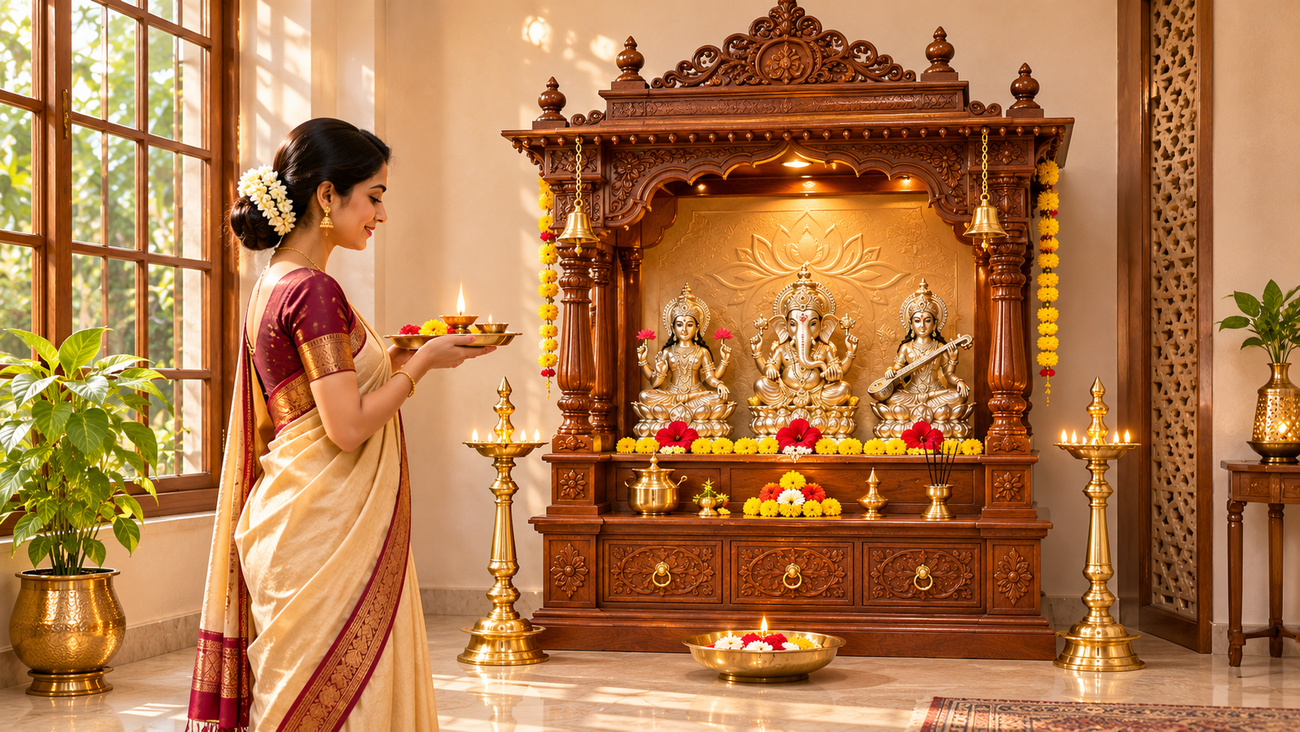
If your home already has a mandir, you do not necessarily need to renovate or relocate it to follow every traditional recommendation.
Several simple adjustments can improve the arrangement and make the prayer area more comfortable.
Here are some practical tips to consider:
1. Review the Existing Placement
Identify the direction of the mandir and understand how it relates to the overall floor plan. If the north-east corner is unavailable, assess other suitable locations.
2. Organise Idols and Religious Pictures
Keep idols and pictures arranged neatly. Remove damaged or unwanted items respectfully according to your family’s religious customs.
3. Improve Lighting and Ventilation
Make sure the prayer area receives sufficient light. If natural ventilation is limited, consider suitable ventilation arrangements.
4. Maintain a Clutter-Free Space
Remove unnecessary decorations, old materials and unrelated household objects from the mandir.
5. Choose Comfortable Colours and Materials
Use simple colours and materials that complement the home’s interiors while maintaining the traditional character of the prayer area.
6. Make the Space Convenient for Daily Worship
Ensure there is enough room for family members to sit, stand and perform regular rituals comfortably.
7. Consider the Complete Home Layout
A pooja room should not be assessed in isolation. Its position in relation to bedrooms, bathrooms, the kitchen, entrances and other rooms may also be considered during a Vastu evaluation.
If you are unsure whether your existing mandir placement follows traditional Vastu principles, a personalised consultation can help you understand the available options.
At Ayushy, residential Vastu guidance focuses on evaluating the property and identifying practical alignment solutions according to its existing structure. You can explore Vastu Shastra Consultancy to understand how a personalised home assessment can support your space-planning requirements.
Frequently Asked Questions
1. Which direction is best for a pooja room as per Vastu?
According to traditional Vastu Shastra, the north-east direction, also known as the Ishan corner, is generally considered the best direction for a pooja room. East and north are also commonly recommended alternatives when the north-east corner is unavailable. The final placement should depend on the overall layout of the home.
2. Can a pooja room be placed in the living room?
Yes. A pooja mandir can be placed in the living room when a separate prayer room is not possible. Ideally, choose a quiet corner, preferably in the north-east direction if the layout permits. A dedicated cabinet or partition can help maintain a separate and peaceful worship area.
3. Which direction should idols face in a home temple?
The placement of idols and the direction in which family members face during prayer should be considered together. Traditional recommendations commonly favour an arrangement that allows worshippers to face east or north. The exact positioning of idols may vary according to the deity, family traditions and mandir layout.
4. Can a pooja room be located near a bathroom?
Traditional Vastu generally recommends keeping the pooja room separate from bathrooms. If the home has limited space, try to maintain reasonable separation and avoid placing the mandir directly against a shared bathroom wall wherever possible. The complete layout should be considered before making changes.
5. Can we have a mandir in a small apartment?
Yes. A small apartment can accommodate a compact pooja mandir without requiring a separate room. A wall-mounted temple, dedicated cabinet or partitioned corner can work well. Choose a suitable location, keep the arrangement simple and ensure sufficient lighting and cleanliness.
6. Is it advisable to have a pooja room under the staircase?
According to traditional Vastu recommendations, a pooja room under a staircase is generally discouraged. Such spaces may have limited headroom, ventilation and natural light. If your mandir is already located there, consider alternative locations after reviewing the overall home layout. Avoid making major structural changes without a proper assessment.
Create a Peaceful and Vastu-Aligned Pooja Space with Ayushy
A pooja room is more than just a designated corner for religious activities. It is a personal space where families connect with their beliefs, practise gratitude and find moments of peace in their everyday lives.
Following traditional pooja room Vastu recommendations can help you plan this space thoughtfully, whether you are designing a new home, moving into an apartment or improving an existing mandir.
From selecting the north-east direction to arranging idols and maintaining a clean prayer area, small planning decisions can make a meaningful difference to the comfort and functionality of your worship space.
However, every home has a different layout, and not all traditional recommendations can be applied in exactly the same way. Understanding the complete property is therefore important before deciding on any major changes.
At Ayushy, Acharya Ayushy offers personalised Vastu consultancy for residential spaces, helping homeowners understand their property’s layout and explore practical Vastu alignment solutions.
If you are planning a new home or looking to review the Vastu arrangement of your existing property, connect with Ayushy for personalised guidance.
Explore our Vastu for Home services or contact Ayushy to discuss your requirements.